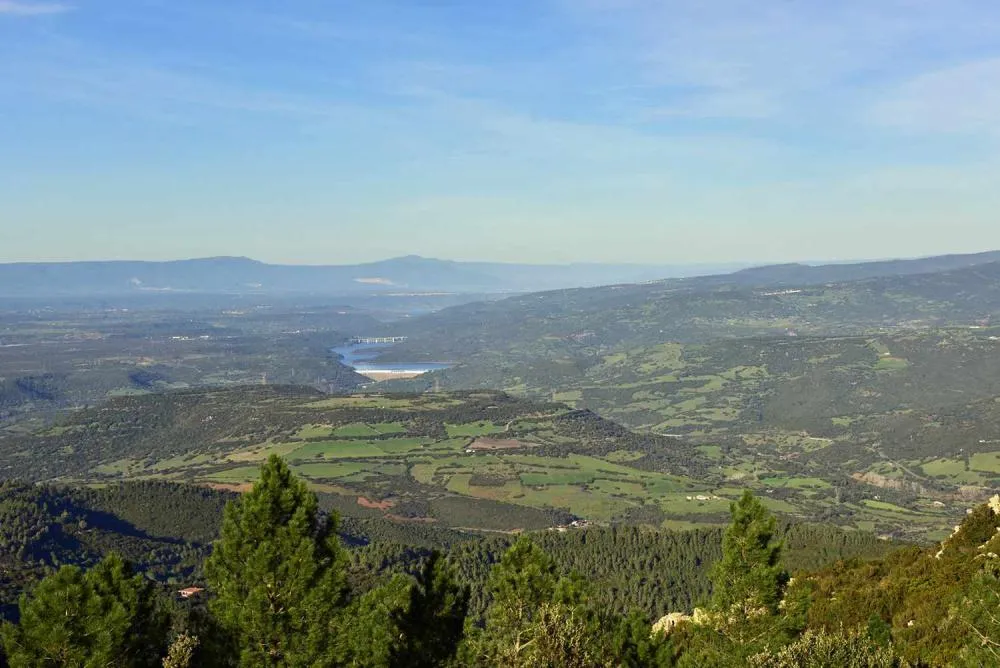

The countryside surrounding Allai lies nestled between Monte Grighine and three main plateaus, creating a natural frame around the village. These plateaus not only protect the settlement but also serve as natural routes leading into the heart of the territory, as though Allai were a precious gem set within a landscape jewel.
The plateaus of Pranu Marjani, Pranu Olisa, and Loddùo offer evocative landscapes and preserve traces of ancient civilizations. The Pranu Marjani plateau, known as the “Gateway to Barbagia,” marks the boundary between Romanized territories and the island’s wilder interior. Pranu Olisa, meanwhile, preserves important archaeological remains, including nuraghi, domus de janas, Giants’ Tombs, and mysterious rock carvings - evidence of ancient settlements that continue to fascinate visitors today.
The plateau of Loddùo, besides forming a natural border with Fordongianus, also preserves valuable traces of the past, including nuraghi, a Giants’ Tomb, Roman-era artefacts and the ruins of an ancient rural church. This church is linked to the legend of the “contested Madonna,” according to which a statue of the Virgin, placed upon an ox-drawn cart, chose to travel toward Allai. Today the statue is preserved in the Church of the Holy Spirit.
Mediterranean scrubland dominates the landscape, where the green of myrtle, mastic and rockrose blends with the golden tones of dry fields, creating striking contrasts.
Traditional activities such as sheep farming and reforestation projects have kept the community of Allai alive, maintaining a lasting bond between the land and its inhabitants.